
Start with your runs.
Time, distance and pace give context to what you did. Your history makes change visible.
01 / YOUR NEXT RUN
Lace up. Start Run. Record your time, distance and route — and discover what your runs can tell you.
Scroll to explore the app
Discover RUN B RUN ↗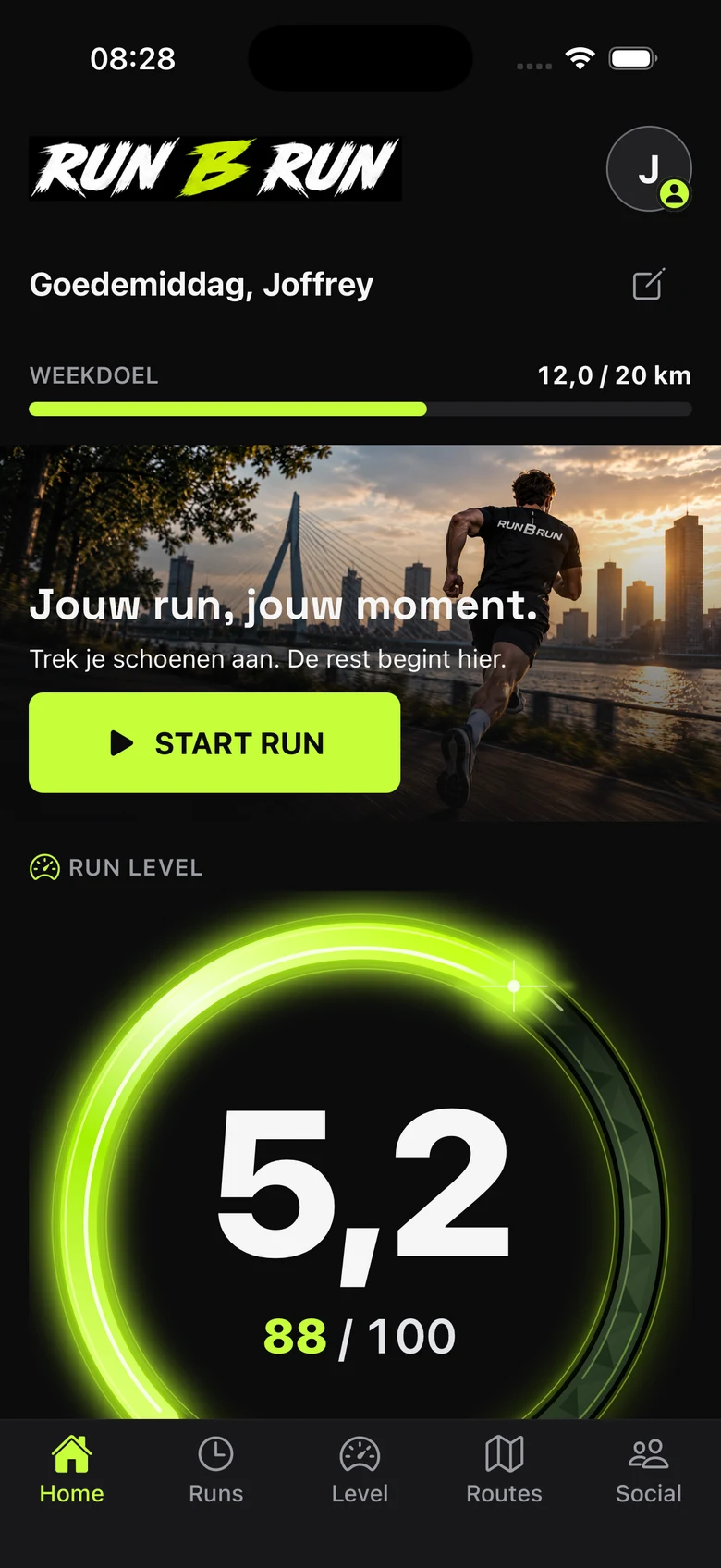
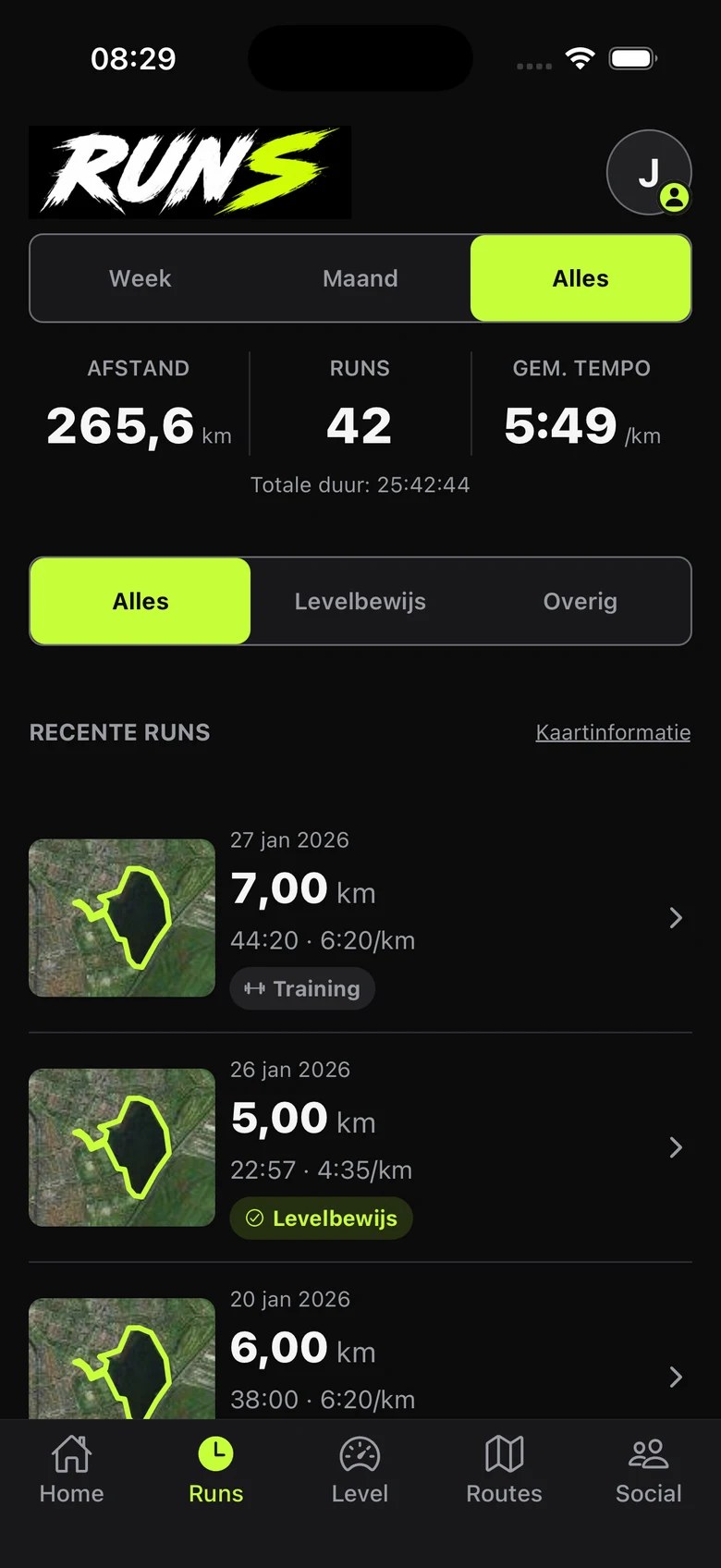
02 / EVERY RUN COUNTS
All your runs together. Look back at distance, time and pace. Turn a single run into a rhythm that works for you.
42 example runs · 265.6 km · one story
03 / KNOW YOUR RUNNING
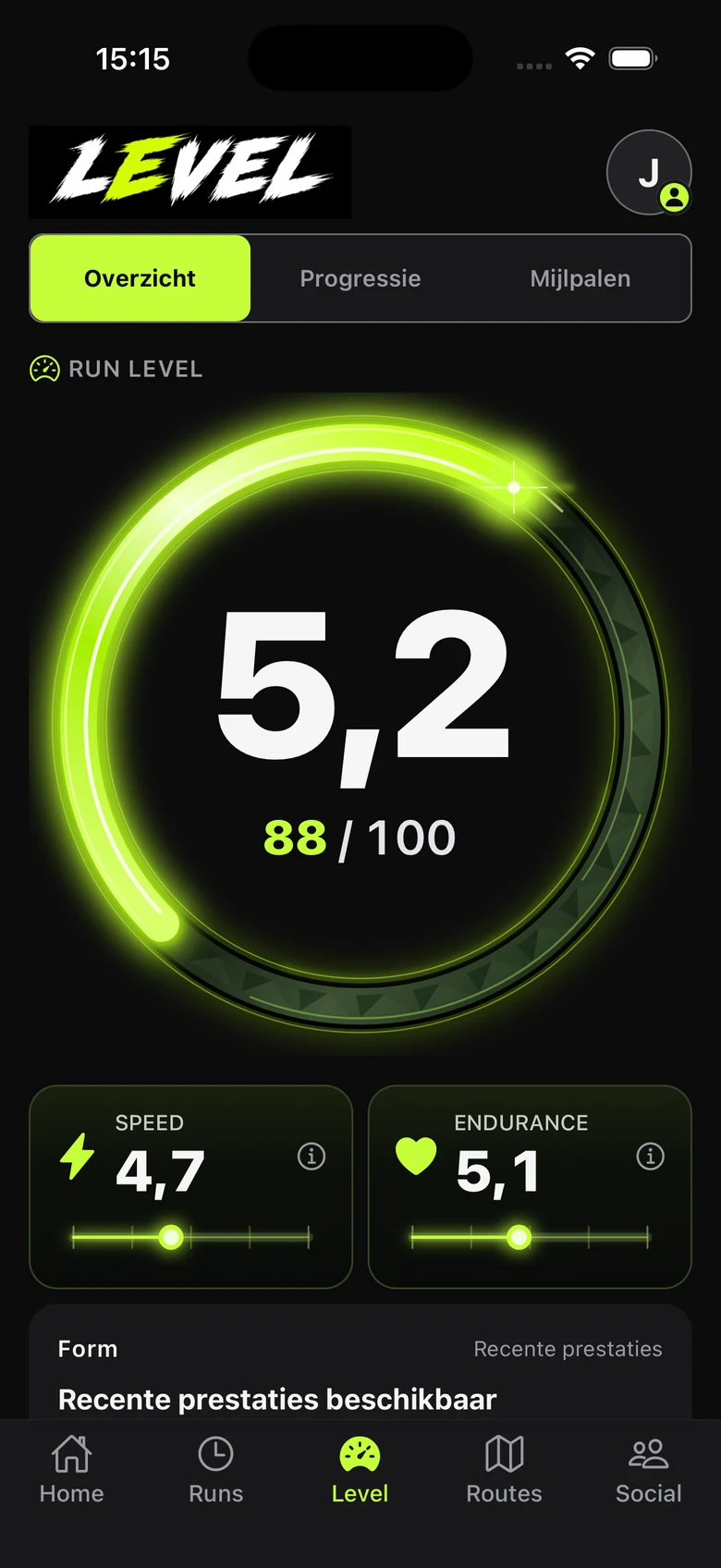
RUN LEVEL combines suitable runs into an estimate of your running level. Speed, Endurance and an evidence score help you understand the result.
Example profile: 5.2 · evidence 88/100
04 / FIND YOUR DIRECTION
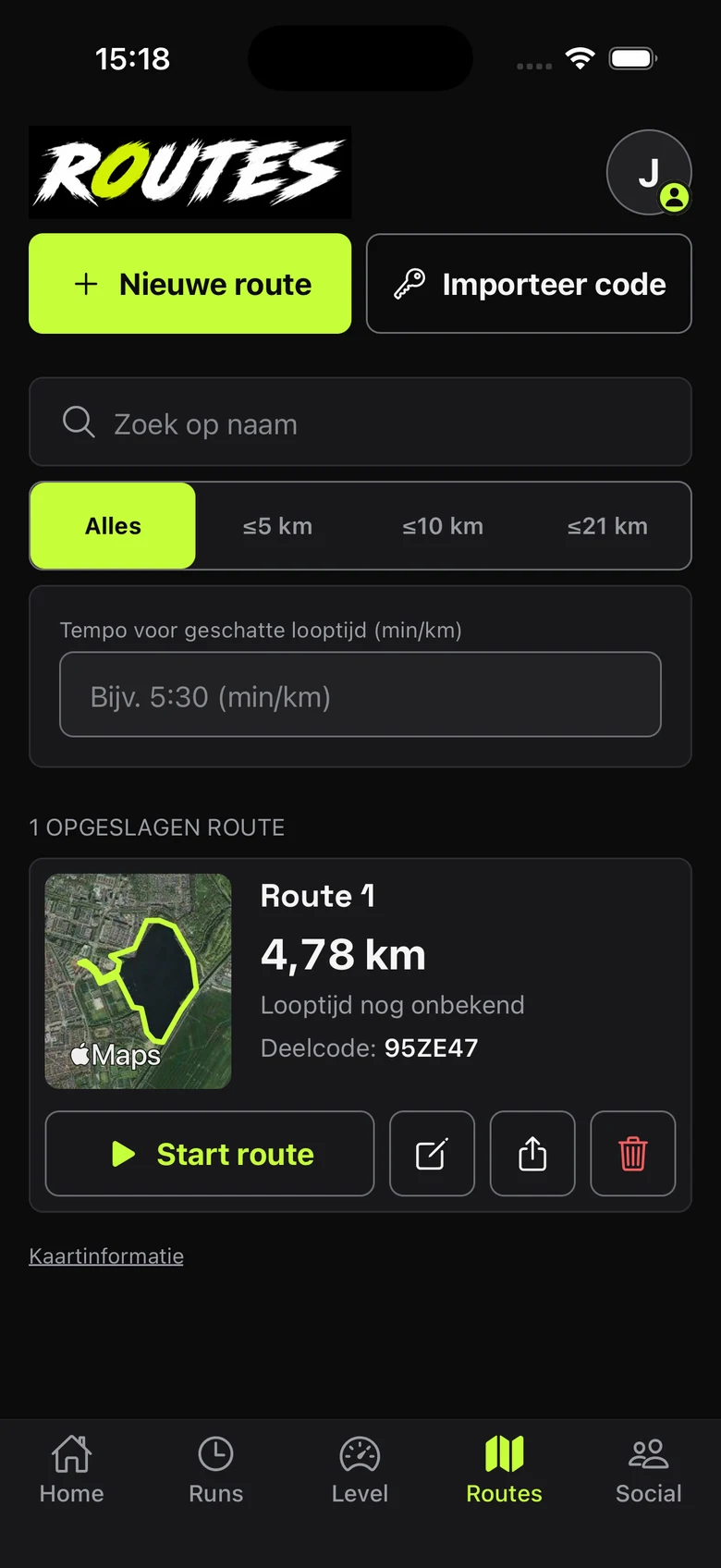
Create a route, save it and take it on your next run. In the manual editor, you choose where each point goes.
Route 1 · 4.78 km · 27 waypoints
05 / GO TOGETHER
Add friends, create a challenge and motivate each other. Running together starts with your own account.
Friends · challenges · B vs B
Your run starts here ↗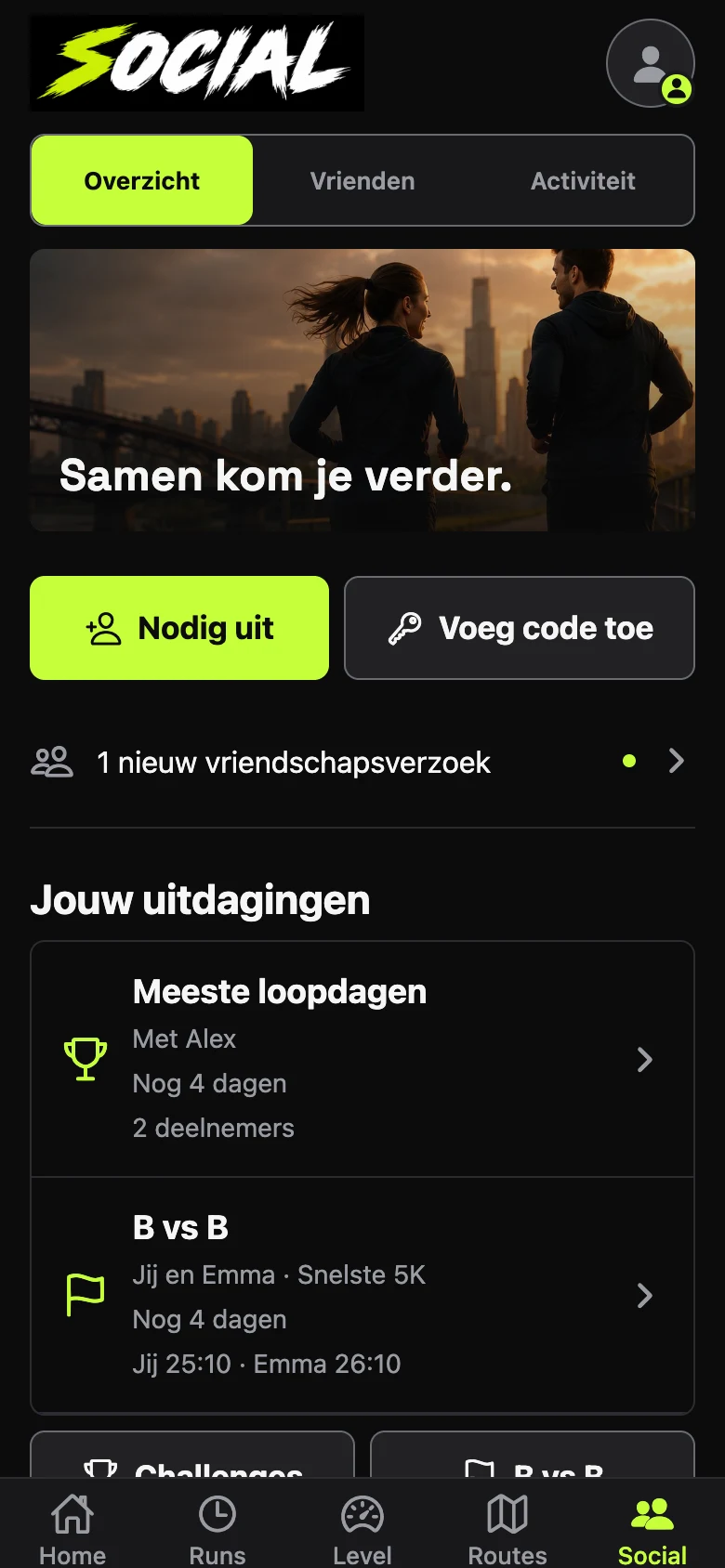
Actual app interface · fictional example profile · RUN LEVEL is a model estimate. Friends and activities shown are examples; app screens are in Dutch.

PROGRESS YOU CAN UNDERSTAND
Time, distance and pace give context to what you did. Your history makes change visible.
RUN LEVEL is a model estimate from suitable runs. The evidence grows with enough recent, varied data.
Easy runs and a sustainable rhythm matter too. Not every workout needs to raise your RUN LEVEL.
RUN B RUN is still being tested. Leave your interest below; a public download will appear here when available.
This is a fictional profile with 42 runs. The app calculates its level and evidence score from those runs. The growth from 3.0 to 5.2 is example data, not a prediction of your progress.
No. Only runs with suitable measurement quality and effort contribute level evidence. Your other runs still remain in your history.
Place your own points. The editor connects them with straight segments. Check that each segment follows a suitable path; manual drawing does not automatically follow roads.
Friends and challenges require an account. The app also includes local tracking and local run history.
Wearable data import is built and being tested. Support and reliability on physical devices still need further validation.